<?xml version="1.0" encoding="utf-8"?><rss version="2.0"
	xmlns:content="http://purl.org/rss/1.0/modules/content/"
	xmlns:dc="http://purl.org/dc/elements/1.1/"
	xmlns:atom="http://www.w3.org/2005/Atom"
	xmlns:sy="http://purl.org/rss/1.0/modules/syndication/"
		>
<channel>
	<title>Comments for Accessible RhetoricAccessible Rhetoric | Accessible Rhetoric</title>
	<atom:link href="http://seanzdenek.com/comments/feed/" rel="self" type="application/rss+xml" />
	<link>http://seanzdenek.com</link>
	<description>web accessibility, rhetoric, and new media</description>
	<lastBuildDate>Sat, 19 Jan 2013 21:10:07 +0000</lastBuildDate>
	<sy:updatePeriod>hourly</sy:updatePeriod>
	<sy:updateFrequency>1</sy:updateFrequency>
	<generator>http://wordpress.org/?v=3.5.1</generator>
	<item>
		<title>Comment on &#8220;The main factor that drives captioning quality is what clients are willing to pay for it.&#8221; by Joe Clark</title>
		<link>http://seanzdenek.com/2012/05/09/the-main-factor-that-drives-captioning-quality-is-what-clients-are-willing-to-pay-for-it/comment-page-1/#comment-13696</link>
		<dc:creator>Joe Clark</dc:creator>
		<pubDate>Sat, 19 Jan 2013 21:10:07 +0000</pubDate>
		<guid isPermaLink="false">http://seanzdenek.com/?p=5832#comment-13696</guid>
		<description><![CDATA[If you want to caption competently, you cannot be:

Someone doing captioning until something better comes along or because it’s the only job vaguely related to your B.A. (Hono[u]rs) English degree.
Someone with so little life experience, and experience watching TV of all kinds, that you do not automatically know what people are talking about and know up front nearly every single term they use.
Someone who &lt;em&gt;at any level&lt;/em&gt; thinks you can just look that up when you get a chance.


You have to have enough experience and literacy, cultural and otherwise, to understand what people are saying exactly when you hear it. You then have to know exactly how to render all those words. You cannot sit there and guess. And, as a typical young woman with a B.A. (Hono[u]rs) History would do, just write shit down phonetically because you don’t understand it and you’ve got a quota to meet.

&lt;em&gt;That’s&lt;/em&gt; why a workforce of young people, mostly female, with commercially-useless liberal-arts degrees are actively harmful to captioning.

Clear?]]></description>
		<content:encoded><![CDATA[<p>If you want to caption competently, you cannot be:</p>
<p>Someone doing captioning until something better comes along or because it’s the only job vaguely related to your B.A. (Hono[u]rs) English degree.<br />
Someone with so little life experience, and experience watching TV of all kinds, that you do not automatically know what people are talking about and know up front nearly every single term they use.<br />
Someone who <em>at any level</em> thinks you can just look that up when you get a chance.</p>
<p>You have to have enough experience and literacy, cultural and otherwise, to understand what people are saying exactly when you hear it. You then have to know exactly how to render all those words. You cannot sit there and guess. And, as a typical young woman with a B.A. (Hono[u]rs) History would do, just write shit down phonetically because you don’t understand it and you’ve got a quota to meet.</p>
<p><em>That’s</em> why a workforce of young people, mostly female, with commercially-useless liberal-arts degrees are actively harmful to captioning.</p>
<p>Clear?</p>
]]></content:encoded>
	</item>
	<item>
		<title>Comment on Drunk speech but sober captions: How manner captions do the heavy lifting by Dawn</title>
		<link>http://seanzdenek.com/2012/03/31/drunk-speech-but-sober-captions-how-manner-captions-do-the-heavy-lifting/comment-page-1/#comment-12320</link>
		<dc:creator>Dawn</dc:creator>
		<pubDate>Fri, 02 Nov 2012 22:02:26 +0000</pubDate>
		<guid isPermaLink="false">http://seanzdenek.com/?p=5388#comment-12320</guid>
		<description><![CDATA[Really enjoyed reading this article. The subtle nuances you point out in captioning how dialogue is being said when it is &#039;out of the norm&#039;  is the standard that all closed captioning, or English Subtitles for the Hard of Hearing as its called in the UK should conform to.  Some great examples here.]]></description>
		<content:encoded><![CDATA[<p>Really enjoyed reading this article. The subtle nuances you point out in captioning how dialogue is being said when it is &#8216;out of the norm&#8217;  is the standard that all closed captioning, or English Subtitles for the Hard of Hearing as its called in the UK should conform to.  Some great examples here.</p>
]]></content:encoded>
	</item>
	<item>
		<title>Comment on Captioned hypnosis by Julia</title>
		<link>http://seanzdenek.com/2011/11/04/captioned-hypnosis/comment-page-1/#comment-11719</link>
		<dc:creator>Julia</dc:creator>
		<pubDate>Tue, 23 Oct 2012 19:27:46 +0000</pubDate>
		<guid isPermaLink="false">http://seanzdenek.com/?p=4819#comment-11719</guid>
		<description><![CDATA[So maybe we shouldn&#039;t discuss what&#039;s right or wrong about each particular word used to describe a sound, and think of the captioning itself as a performance by the person doing the captioning. Basically, you are watching two shows for the price of one. Not much different then watching an interpreter for a live presentation and picking it all apart because one terp is a CODA and uses local sayings and the other terp never met a deaf person before they decided to take sign language at a prestigious sign language interpreter training program just because daddy was rich enough to send them, and see how the two styles are wildly different. Two artists painting the same lily pond and one looks like Monet and the other looks like Mondrian. Art is similar to beauty - it&#039;s in the eye of the beholder (at the mercy of whatever skill the artist actually possesses, as well as any inspiration that comes along to enhance the end result.). Two photographers can be at the same landscape, and one only has a simple black and white Kodak Brownie Hawkeye and the other has an iPhone loaded with the Histamatic app, but has a palsy in their arms and shakes terribly. The photos from each person will be completely different.
 
Here, I think each version of how HypnoToad sounds is charmingly unique. It is an interesting exercise to see the different interpretations of how each captionist perceived the sound. Was one captionist a hearing person? was one captionist a late deafened adult listening to the source video with major audio technical headphones (don&#039;t scoff, because 30 years ago, I read in the newsletter produced by the National Captioning Institute a short bio of one of their captionists who WAS very hard of hearing - she used a transcript and listened with great big powerful earphones to hear and then typed the sound out or the words out. There was even a photo of the lady. This was in the days before the WorldWideWeb phase of the Internet).
 
As for the source of the sound like knowing that it is a recording of a turbine engine being played backwards - hmmm, I&#039;d think that would be distracting in the actual performance. But there is a place for that, if it&#039;s part of a DVD performance, and that would be one of those side shows, where scene outtakes, bloopers, biographical info on the actors, that sort of thing is located. Film producers could conceivably include a discussion from the sound people as to how sounds were made, what technical challenges presented in performing the captions, etc.

Oh another thought is, we don&#039;t know who the viewers are and what their background is - so when you bring the viewers to the table, what you might prefer in terms of caption performance might be different then what I believe I would prefer (I mostly just want whatever English words they use spelled correctly!!) or what someone else watching it might prefer and/or understand, for that matter. Some of these details like how a sound sounds like (droning, buzzing, sputtering) might have no meaning for one person, just because they may be from another country and mentally translating into their language, and maybe their language, people don&#039;t &quot;sputter&quot; or things don&#039;t &quot;dronw&quot;? who know? I&#039;m not a language expert, but I have read about certain concepts important to one language and culture might have many many different words to explain different shades of meaning, and in the English word, there&#039;s only one word. For example - the classic story about the Native Peoples of Alaska or Canada, having something like 30 words in their language that have to do with the concept of &quot;ice&quot; - yet in English, &quot;ice&quot; is &quot;ice&quot;. Maybe &quot;Black ice&quot; for those who might have an understanding of that concept, but parts of the English speaking states in USA and other countries might not ever see snow and ice on the ground in their lifetimes, so &quot;black ice&quot; wouldn&#039;t really even mean anything. 

Seems like in my art history classes, we heard that in the Italian and French languages there were far more words used to describe different nuances of art, food, and music than what we use for the same concepts in English speaking countries. Can&#039;t think of any specific examples now, but I do remember Evelyn Glennie&#039;s husband telling me that the Italian word for both &quot;hear&quot; and &quot;feel&quot; is &quot;sentire&quot;. Why do we have one word to describe &quot;hear&quot; that stuff that goes in our ears, and &quot;feel&quot; that stuff we can feel with our hands, when sound itself, depending on the volume, can be both heard and felt? It&#039;s an interesting way to relate to the world, and to think that sometimes the senses are far more integrated then we might imagine.
 
Anyway, this is just one perspective - I&#039;m hardly so involved as to say that it is the &quot;right&quot; perspective or the &quot;only&quot; perspective, any more than the previously offered comments, all of which add to the overall understanding and perception of the captions as we receive them....
 
All I can say, is THANK GOD someone out there captions these shows... makes it easier for me to pick through and decide which shows are worth watching and which shows I can just go &quot;move along, nothing to see here..&quot; and quickly change channels. Or turn the HypnoToad show OFF!! (smile!!!)]]></description>
		<content:encoded><![CDATA[<p>So maybe we shouldn&#8217;t discuss what&#8217;s right or wrong about each particular word used to describe a sound, and think of the captioning itself as a performance by the person doing the captioning. Basically, you are watching two shows for the price of one. Not much different then watching an interpreter for a live presentation and picking it all apart because one terp is a CODA and uses local sayings and the other terp never met a deaf person before they decided to take sign language at a prestigious sign language interpreter training program just because daddy was rich enough to send them, and see how the two styles are wildly different. Two artists painting the same lily pond and one looks like Monet and the other looks like Mondrian. Art is similar to beauty &#8211; it&#8217;s in the eye of the beholder (at the mercy of whatever skill the artist actually possesses, as well as any inspiration that comes along to enhance the end result.). Two photographers can be at the same landscape, and one only has a simple black and white Kodak Brownie Hawkeye and the other has an iPhone loaded with the Histamatic app, but has a palsy in their arms and shakes terribly. The photos from each person will be completely different.</p>
<p>Here, I think each version of how HypnoToad sounds is charmingly unique. It is an interesting exercise to see the different interpretations of how each captionist perceived the sound. Was one captionist a hearing person? was one captionist a late deafened adult listening to the source video with major audio technical headphones (don&#8217;t scoff, because 30 years ago, I read in the newsletter produced by the National Captioning Institute a short bio of one of their captionists who WAS very hard of hearing &#8211; she used a transcript and listened with great big powerful earphones to hear and then typed the sound out or the words out. There was even a photo of the lady. This was in the days before the WorldWideWeb phase of the Internet).</p>
<p>As for the source of the sound like knowing that it is a recording of a turbine engine being played backwards &#8211; hmmm, I&#8217;d think that would be distracting in the actual performance. But there is a place for that, if it&#8217;s part of a DVD performance, and that would be one of those side shows, where scene outtakes, bloopers, biographical info on the actors, that sort of thing is located. Film producers could conceivably include a discussion from the sound people as to how sounds were made, what technical challenges presented in performing the captions, etc.</p>
<p>Oh another thought is, we don&#8217;t know who the viewers are and what their background is &#8211; so when you bring the viewers to the table, what you might prefer in terms of caption performance might be different then what I believe I would prefer (I mostly just want whatever English words they use spelled correctly!!) or what someone else watching it might prefer and/or understand, for that matter. Some of these details like how a sound sounds like (droning, buzzing, sputtering) might have no meaning for one person, just because they may be from another country and mentally translating into their language, and maybe their language, people don&#8217;t &#8220;sputter&#8221; or things don&#8217;t &#8220;dronw&#8221;? who know? I&#8217;m not a language expert, but I have read about certain concepts important to one language and culture might have many many different words to explain different shades of meaning, and in the English word, there&#8217;s only one word. For example &#8211; the classic story about the Native Peoples of Alaska or Canada, having something like 30 words in their language that have to do with the concept of &#8220;ice&#8221; &#8211; yet in English, &#8220;ice&#8221; is &#8220;ice&#8221;. Maybe &#8220;Black ice&#8221; for those who might have an understanding of that concept, but parts of the English speaking states in USA and other countries might not ever see snow and ice on the ground in their lifetimes, so &#8220;black ice&#8221; wouldn&#8217;t really even mean anything. </p>
<p>Seems like in my art history classes, we heard that in the Italian and French languages there were far more words used to describe different nuances of art, food, and music than what we use for the same concepts in English speaking countries. Can&#8217;t think of any specific examples now, but I do remember Evelyn Glennie&#8217;s husband telling me that the Italian word for both &#8220;hear&#8221; and &#8220;feel&#8221; is &#8220;sentire&#8221;. Why do we have one word to describe &#8220;hear&#8221; that stuff that goes in our ears, and &#8220;feel&#8221; that stuff we can feel with our hands, when sound itself, depending on the volume, can be both heard and felt? It&#8217;s an interesting way to relate to the world, and to think that sometimes the senses are far more integrated then we might imagine.</p>
<p>Anyway, this is just one perspective &#8211; I&#8217;m hardly so involved as to say that it is the &#8220;right&#8221; perspective or the &#8220;only&#8221; perspective, any more than the previously offered comments, all of which add to the overall understanding and perception of the captions as we receive them&#8230;.</p>
<p>All I can say, is THANK GOD someone out there captions these shows&#8230; makes it easier for me to pick through and decide which shows are worth watching and which shows I can just go &#8220;move along, nothing to see here..&#8221; and quickly change channels. Or turn the HypnoToad show OFF!! (smile!!!)</p>
]]></content:encoded>
	</item>
	<item>
		<title>Comment on &#8220;The main factor that drives captioning quality is what clients are willing to pay for it.&#8221; by Sean Zdenek</title>
		<link>http://seanzdenek.com/2012/05/09/the-main-factor-that-drives-captioning-quality-is-what-clients-are-willing-to-pay-for-it/comment-page-1/#comment-1693</link>
		<dc:creator>Sean Zdenek</dc:creator>
		<pubDate>Thu, 10 May 2012 13:46:32 +0000</pubDate>
		<guid isPermaLink="false">http://seanzdenek.com/?p=5832#comment-1693</guid>
		<description><![CDATA[Mirabai,

As a &quot;man who received a liberal arts degree in his 20s&quot; (a long time ago), I struggle with the criticism of the liberal arts. In many ways, the liberal arts have provided me with just the right kind of training to manage the demands of modern life and many of the demands of captioning (as I have come to understand them). 

But I think what&#039;s key to the criticism is the claim that most (new) captioners have &quot;next to no life experience.&quot; Here&#039;s the full quote from &lt;a href=&quot;http://blog.fawny.org/2006/08/13/nugget/&quot; rel=&quot;nofollow&quot;&gt;Joe Clark&lt;/a&gt;:

&lt;blockquote&gt;
&quot;...most captioners in Canada are women in their 20s with next to no life experience and with liberal-arts degrees they can’t use.&quot; 
&lt;/blockquote&gt;

I&#039;m not sure this is fair either, but I have to admit that it makes sense in the context of a TV show like &lt;em&gt;Family Guy&lt;/em&gt;, which I think I would be ill-equipped to caption if I were in my 20s today. Too many of the pop culture references are located in the 1970s and 1980s. Captioners need to be pretty knowledgeable of the world to recognize and know how to caption allusions to sounds of the past. 

Your question is an excellent one -- paraphrased as: If not the liberal arts, then what are captioning companies looking for? -- and I&#039;d love to hear more responses to this question. In interviews I conducted with captioners (and continue to conduct!), I believe all the participants had degrees in the liberal arts (journalism, theater, English, Communication Studies). 

Sean]]></description>
		<content:encoded><![CDATA[<p>Mirabai,</p>
<p>As a &#8220;man who received a liberal arts degree in his 20s&#8221; (a long time ago), I struggle with the criticism of the liberal arts. In many ways, the liberal arts have provided me with just the right kind of training to manage the demands of modern life and many of the demands of captioning (as I have come to understand them). </p>
<p>But I think what&#8217;s key to the criticism is the claim that most (new) captioners have &#8220;next to no life experience.&#8221; Here&#8217;s the full quote from <a href="http://blog.fawny.org/2006/08/13/nugget/" rel="nofollow">Joe Clark</a>:</p>
<blockquote><p>
&#8220;&#8230;most captioners in Canada are women in their 20s with next to no life experience and with liberal-arts degrees they can’t use.&#8221;
</p></blockquote>
<p>I&#8217;m not sure this is fair either, but I have to admit that it makes sense in the context of a TV show like <em>Family Guy</em>, which I think I would be ill-equipped to caption if I were in my 20s today. Too many of the pop culture references are located in the 1970s and 1980s. Captioners need to be pretty knowledgeable of the world to recognize and know how to caption allusions to sounds of the past. </p>
<p>Your question is an excellent one &#8212; paraphrased as: If not the liberal arts, then what are captioning companies looking for? &#8212; and I&#8217;d love to hear more responses to this question. In interviews I conducted with captioners (and continue to conduct!), I believe all the participants had degrees in the liberal arts (journalism, theater, English, Communication Studies). </p>
<p>Sean</p>
]]></content:encoded>
	</item>
	<item>
		<title>Comment on &#8220;The main factor that drives captioning quality is what clients are willing to pay for it.&#8221; by Mirabai Knight</title>
		<link>http://seanzdenek.com/2012/05/09/the-main-factor-that-drives-captioning-quality-is-what-clients-are-willing-to-pay-for-it/comment-page-1/#comment-1692</link>
		<dc:creator>Mirabai Knight</dc:creator>
		<pubDate>Thu, 10 May 2012 11:49:58 +0000</pubDate>
		<guid isPermaLink="false">http://seanzdenek.com/?p=5832#comment-1692</guid>
		<description><![CDATA[As a woman in her 30s with a BA in Liberal Arts* who was in her 20s when she was working as an offline captioner, I&#039;m a bit baffled by the tone of the last few paragraphs. What qualifications are they looking for? I don&#039;t know of any institutions that offer a degree in captioning, and most realtime captioners (which most people would agree is significantly harder to do well than offline, because there&#039;s often less time to consult reference materials, so more of the rules of spelling, punctuation, and captioning style need to be internalized and at one&#039;s fingertips) only have an associate&#039;s degree. Good captioning comes from good training and dedication to the craft, and most literate college-educated people can learn it if they choose to. 

That aside, I agree with pretty much everything else in this article. The fundamental problem is that the people who pay for these services are by and large not the people who use these services, and they&#039;ve shown time and again that they&#039;re willing to forgo quality for the sake of a price cut. It&#039;s very disheartening. I can only hope that as the Baby Boomer generation starts using captioning more and more often,  they&#039;ll create a significant market force that holds companies accountable for providing quality captioning, and that affects their bottom line when they cut corners. Without the influence of caption users and their wallets, this downward trend of cost and quality is only too likely to continue.


---------------
*Which required me to read, discuss, and write papers on the following books over the course of four years: http://en.wikipedia.org/wiki/St._John%27s_College_%28United_States%29#The_Great_Books]]></description>
		<content:encoded><![CDATA[<p>As a woman in her 30s with a BA in Liberal Arts* who was in her 20s when she was working as an offline captioner, I&#8217;m a bit baffled by the tone of the last few paragraphs. What qualifications are they looking for? I don&#8217;t know of any institutions that offer a degree in captioning, and most realtime captioners (which most people would agree is significantly harder to do well than offline, because there&#8217;s often less time to consult reference materials, so more of the rules of spelling, punctuation, and captioning style need to be internalized and at one&#8217;s fingertips) only have an associate&#8217;s degree. Good captioning comes from good training and dedication to the craft, and most literate college-educated people can learn it if they choose to. </p>
<p>That aside, I agree with pretty much everything else in this article. The fundamental problem is that the people who pay for these services are by and large not the people who use these services, and they&#8217;ve shown time and again that they&#8217;re willing to forgo quality for the sake of a price cut. It&#8217;s very disheartening. I can only hope that as the Baby Boomer generation starts using captioning more and more often,  they&#8217;ll create a significant market force that holds companies accountable for providing quality captioning, and that affects their bottom line when they cut corners. Without the influence of caption users and their wallets, this downward trend of cost and quality is only too likely to continue.</p>
<p>&#8212;&#8212;&#8212;&#8212;&#8212;<br />
*Which required me to read, discuss, and write papers on the following books over the course of four years: <a href="http://en.wikipedia.org/wiki/St._John%27s_College_%28United_States%29#The_Great_Books" rel="nofollow">http://en.wikipedia.org/wiki/St._John%27s_College_%28United_States%29#The_Great_Books</a></p>
]]></content:encoded>
	</item>
	<item>
		<title>Comment on &#8220;The main factor that drives captioning quality is what clients are willing to pay for it.&#8221; by Sean Zdenek</title>
		<link>http://seanzdenek.com/2012/05/09/the-main-factor-that-drives-captioning-quality-is-what-clients-are-willing-to-pay-for-it/comment-page-1/#comment-1689</link>
		<dc:creator>Sean Zdenek</dc:creator>
		<pubDate>Wed, 09 May 2012 22:37:20 +0000</pubDate>
		<guid isPermaLink="false">http://seanzdenek.com/?p=5832#comment-1689</guid>
		<description><![CDATA[Joe,

I inserted your name in brackets and linked to one of the pages on your site that includes the reference. Thanks!

Sean]]></description>
		<content:encoded><![CDATA[<p>Joe,</p>
<p>I inserted your name in brackets and linked to one of the pages on your site that includes the reference. Thanks!</p>
<p>Sean</p>
]]></content:encoded>
	</item>
	<item>
		<title>Comment on &#8220;The main factor that drives captioning quality is what clients are willing to pay for it.&#8221; by Joe Clark</title>
		<link>http://seanzdenek.com/2012/05/09/the-main-factor-that-drives-captioning-quality-is-what-clients-are-willing-to-pay-for-it/comment-page-1/#comment-1688</link>
		<dc:creator>Joe Clark</dc:creator>
		<pubDate>Wed, 09 May 2012 21:16:12 +0000</pubDate>
		<guid isPermaLink="false">http://seanzdenek.com/?p=5832#comment-1688</guid>
		<description><![CDATA[If you&#039;re going to quote me or quite someone quoting me, do it by name.]]></description>
		<content:encoded><![CDATA[<p>If you&#8217;re going to quote me or quite someone quoting me, do it by name.</p>
]]></content:encoded>
	</item>
	<item>
		<title>Comment on Humanizing nameless speakers by Sean Zdenek</title>
		<link>http://seanzdenek.com/2012/02/24/humanizing-nameless-speakers-with-speaker-ids/comment-page-1/#comment-1352</link>
		<dc:creator>Sean Zdenek</dc:creator>
		<pubDate>Sun, 26 Feb 2012 03:10:47 +0000</pubDate>
		<guid isPermaLink="false">http://seanzdenek.com/?p=5309#comment-1352</guid>
		<description><![CDATA[That&#039;s an excellent point, Bill. That&#039;s why it&#039;s important to attend to context when dealing with Speaker IDs. If the voice gives away the identity, then a Speaker ID (with a specific name) may be warranted. 

I prefer more flexible guidelines over rigid rules. 

Sean]]></description>
		<content:encoded><![CDATA[<p>That&#8217;s an excellent point, Bill. That&#8217;s why it&#8217;s important to attend to context when dealing with Speaker IDs. If the voice gives away the identity, then a Speaker ID (with a specific name) may be warranted. </p>
<p>I prefer more flexible guidelines over rigid rules. </p>
<p>Sean</p>
]]></content:encoded>
	</item>
	<item>
		<title>Comment on Humanizing nameless speakers by Bill</title>
		<link>http://seanzdenek.com/2012/02/24/humanizing-nameless-speakers-with-speaker-ids/comment-page-1/#comment-1350</link>
		<dc:creator>Bill</dc:creator>
		<pubDate>Sat, 25 Feb 2012 21:05:08 +0000</pubDate>
		<guid isPermaLink="false">http://seanzdenek.com/?p=5309#comment-1350</guid>
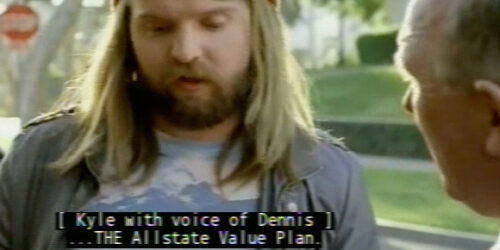
		<description><![CDATA[I&#039;m not familiar with the scene in the first clip, but one thing that a hearing listener has that a deaf/hh person doesn&#039;t is the ability to recognize and identify a person by voice. If the character has appeared before, the hearing listener might recognize his voice. Sometimes that&#039;s an issue that a speaker id compensates for. (as in &quot;voice of Dennis&quot;).]]></description>
		<content:encoded><![CDATA[<p>I&#8217;m not familiar with the scene in the first clip, but one thing that a hearing listener has that a deaf/hh person doesn&#8217;t is the ability to recognize and identify a person by voice. If the character has appeared before, the hearing listener might recognize his voice. Sometimes that&#8217;s an issue that a speaker id compensates for. (as in &#8220;voice of Dennis&#8221;).</p>
]]></content:encoded>
	</item>
	<item>
		<title>Comment on “Subtitles I like to ride on”: When medium awareness extends to subtitles by Dawn</title>
		<link>http://seanzdenek.com/2012/01/06/subtitles-i-like-to-ride-on-when-medium-awareness-extends-to-subtitles/comment-page-1/#comment-1244</link>
		<dc:creator>Dawn</dc:creator>
		<pubDate>Mon, 06 Feb 2012 14:04:11 +0000</pubDate>
		<guid isPermaLink="false">http://seanzdenek.com/?p=5024#comment-1244</guid>
		<description><![CDATA[What a great collection put together. I love comedy mixed with subtitles.It&#039;s a simple concept but they deliver it well - they are making comedy out of the voice recognition technology used to provide automatic captions which are often wrong! http://youtu.be/hVNrkXM3TTI]]></description>
		<content:encoded><![CDATA[<p>What a great collection put together. I love comedy mixed with subtitles.It&#8217;s a simple concept but they deliver it well &#8211; they are making comedy out of the voice recognition technology used to provide automatic captions which are often wrong! <a href="http://youtu.be/hVNrkXM3TTI" rel="nofollow">http://youtu.be/hVNrkXM3TTI</a></p>
]]></content:encoded>
	</item>
	<item>
		<title>Comment on Captioned silence? by Johanna</title>
		<link>http://seanzdenek.com/2011/08/04/captioning-silence/comment-page-1/#comment-1173</link>
		<dc:creator>Johanna</dc:creator>
		<pubDate>Sat, 28 Jan 2012 00:50:39 +0000</pubDate>
		<guid isPermaLink="false">http://seanzdenek.com/?p=4126#comment-1173</guid>
		<description><![CDATA[In Sweden, people don&#039;t care about people who can&#039;t hear... They place permanent subtitles in the picture for people that can hear the audio.]]></description>
		<content:encoded><![CDATA[<p>In Sweden, people don&#8217;t care about people who can&#8217;t hear&#8230; They place permanent subtitles in the picture for people that can hear the audio.</p>
]]></content:encoded>
	</item>
	<item>
		<title>Comment on Busy signal or engaged tone? Captions, language variety, and localized accessibility by Matteo</title>
		<link>http://seanzdenek.com/2011/09/16/busy-signal-or-engaged-tone-captions-language-variety-and-localized-accessibility/comment-page-1/#comment-1138</link>
		<dc:creator>Matteo</dc:creator>
		<pubDate>Fri, 20 Jan 2012 21:34:06 +0000</pubDate>
		<guid isPermaLink="false">http://seanzdenek.com/?p=4512#comment-1138</guid>
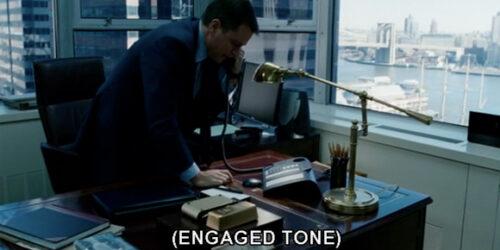
		<description><![CDATA[It&#039;s a good point that there are important differences between UK and US English (and other forms of English spoken throughout the world), but closed captions are used in North America only.  In the UK, the rough equivalent would be SDH/HOH subtitles.]]></description>
		<content:encoded><![CDATA[<p>It&#8217;s a good point that there are important differences between UK and US English (and other forms of English spoken throughout the world), but closed captions are used in North America only.  In the UK, the rough equivalent would be SDH/HOH subtitles.</p>
]]></content:encoded>
	</item>
	<item>
		<title>Comment on &#8220;That whole thing&#8217;s your name?&#8221; Captioning names in The Fifth Element by codeman38</title>
		<link>http://seanzdenek.com/2012/01/13/that-whole-things-your-name-captioning-names-in-the-fifth-element/comment-page-1/#comment-1137</link>
		<dc:creator>codeman38</dc:creator>
		<pubDate>Fri, 20 Jan 2012 17:10:34 +0000</pubDate>
		<guid isPermaLink="false">http://seanzdenek.com/?p=5152#comment-1137</guid>
		<description><![CDATA[It would not surprise me at all if the captioning track was directly copied from the VHS release, while the subtitle track was newly authored for the DVD. This is something that I&#039;ve seen on a number of other releases for movies and TV series that predate the DVD format-- where errors from the captioning on the original VHS release or TV airing were preserved in the DVD release&#039;s Line 21 captions but not in its subtitles.]]></description>
		<content:encoded><![CDATA[<p>It would not surprise me at all if the captioning track was directly copied from the VHS release, while the subtitle track was newly authored for the DVD. This is something that I&#8217;ve seen on a number of other releases for movies and TV series that predate the DVD format&#8211; where errors from the captioning on the original VHS release or TV airing were preserved in the DVD release&#8217;s Line 21 captions but not in its subtitles.</p>
]]></content:encoded>
	</item>
	<item>
		<title>Comment on &#8220;That whole thing&#8217;s your name?&#8221; Captioning names in The Fifth Element by Mirabai Knight</title>
		<link>http://seanzdenek.com/2012/01/13/that-whole-things-your-name-captioning-names-in-the-fifth-element/comment-page-1/#comment-1110</link>
		<dc:creator>Mirabai Knight</dc:creator>
		<pubDate>Sun, 15 Jan 2012 01:52:35 +0000</pubDate>
		<guid isPermaLink="false">http://seanzdenek.com/?p=5152#comment-1110</guid>
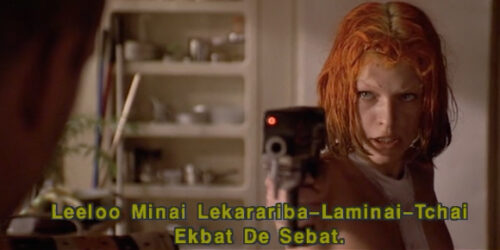
		<description><![CDATA[Great post. I absolutely agree, both that different people (working independently) produced each track, and that both should have been verbatim. This clip reminded me of when I had to caption Barbarella, in which the word &quot;Llanfairpwllgwyngyllgogerychwyrndrobwllllantysiliogogogoch&quot; was used as a password. I&#039;d seen it in print but had never heard it spoken before, so I initially assumed they were using a word that they&#039;d made up specifically for the movie and transcribed it &quot;Panfirepufkingithgolgerechcandithinalgolgolgoth&quot;. But when I went on Barbarella&#039;s IMDB page to check something else, the line was mentioned under &quot;memorable quotes&quot;, so I was able to go back and correct the captioning transcript before sending it out.]]></description>
		<content:encoded><![CDATA[<p>Great post. I absolutely agree, both that different people (working independently) produced each track, and that both should have been verbatim. This clip reminded me of when I had to caption Barbarella, in which the word &#8220;Llanfairpwllgwyngyllgogerychwyrndrobwllllantysiliogogogoch&#8221; was used as a password. I&#8217;d seen it in print but had never heard it spoken before, so I initially assumed they were using a word that they&#8217;d made up specifically for the movie and transcribed it &#8220;Panfirepufkingithgolgerechcandithinalgolgolgoth&#8221;. But when I went on Barbarella&#8217;s IMDB page to check something else, the line was mentioned under &#8220;memorable quotes&#8221;, so I was able to go back and correct the captioning transcript before sending it out.</p>
]]></content:encoded>
	</item>
	<item>
		<title>Comment on &#8220;That whole thing&#8217;s your name?&#8221; Captioning names in The Fifth Element by Bill</title>
		<link>http://seanzdenek.com/2012/01/13/that-whole-things-your-name-captioning-names-in-the-fifth-element/comment-page-1/#comment-1108</link>
		<dc:creator>Bill</dc:creator>
		<pubDate>Sat, 14 Jan 2012 18:00:48 +0000</pubDate>
		<guid isPermaLink="false">http://seanzdenek.com/?p=5152#comment-1108</guid>
		<description><![CDATA[I thought that was an interesting side by side. For example, in the first second, doesn&#039;t he say, either, &quot;Hi&quot;, or &quot;I-I drive a cab&quot;

And the subtitles skip &quot;This is me&quot;

Both captions ands subtitles skip &quot;You&quot; in &quot;You take it. Go ahead&quot;, and the Subtitles skip &quot;Go ahead&quot;.

None of these things actually impact the movie, like the skipping of the long name, but seem oddly absent. Probably just human error - lack of time and easy to overlook on a long project.

But I imagine that captioning the name, one would have had to have some access to that information - It&#039;s not in IMDb under character names, just under quotes.]]></description>
		<content:encoded><![CDATA[<p>I thought that was an interesting side by side. For example, in the first second, doesn&#8217;t he say, either, &#8220;Hi&#8221;, or &#8220;I-I drive a cab&#8221;</p>
<p>And the subtitles skip &#8220;This is me&#8221;</p>
<p>Both captions ands subtitles skip &#8220;You&#8221; in &#8220;You take it. Go ahead&#8221;, and the Subtitles skip &#8220;Go ahead&#8221;.</p>
<p>None of these things actually impact the movie, like the skipping of the long name, but seem oddly absent. Probably just human error &#8211; lack of time and easy to overlook on a long project.</p>
<p>But I imagine that captioning the name, one would have had to have some access to that information &#8211; It&#8217;s not in IMDb under character names, just under quotes.</p>
]]></content:encoded>
	</item>
	<item>
		<title>Comment on “Subtitles I like to ride on”: When medium awareness extends to subtitles by Chris</title>
		<link>http://seanzdenek.com/2012/01/06/subtitles-i-like-to-ride-on-when-medium-awareness-extends-to-subtitles/comment-page-1/#comment-1102</link>
		<dc:creator>Chris</dc:creator>
		<pubDate>Thu, 12 Jan 2012 21:10:56 +0000</pubDate>
		<guid isPermaLink="false">http://seanzdenek.com/?p=5024#comment-1102</guid>
		<description><![CDATA[http://www.youtube.com/watch?v=RFAulpHi0kA

skip ahead to about 1:55 then watch.]]></description>
		<content:encoded><![CDATA[<p><a href="http://www.youtube.com/watch?v=RFAulpHi0kA" rel="nofollow">http://www.youtube.com/watch?v=RFAulpHi0kA</a></p>
<p>skip ahead to about 1:55 then watch.</p>
]]></content:encoded>
	</item>
	<item>
		<title>Comment on Captioned hypnosis by Sean Zdenek</title>
		<link>http://seanzdenek.com/2011/11/04/captioned-hypnosis/comment-page-1/#comment-1097</link>
		<dc:creator>Sean Zdenek</dc:creator>
		<pubDate>Wed, 11 Jan 2012 02:13:11 +0000</pubDate>
		<guid isPermaLink="false">http://seanzdenek.com/?p=4819#comment-1097</guid>
		<description><![CDATA[Good point, ReallyRosy. I&#039;m convinced that caption viewers at times need to be highly literate to process some of the descriptive terms used by captioners for non-speech captions. Thrumming is such an unusual word too. I went to my dictionary for that one. I like the way that word sounds but the meaning of the word was not familiar to me. 

A usability study involving deaf and HoH readers discussing the different options for the hypnotoad sound would be interesting!

Sean]]></description>
		<content:encoded><![CDATA[<p>Good point, ReallyRosy. I&#8217;m convinced that caption viewers at times need to be highly literate to process some of the descriptive terms used by captioners for non-speech captions. Thrumming is such an unusual word too. I went to my dictionary for that one. I like the way that word sounds but the meaning of the word was not familiar to me. </p>
<p>A usability study involving deaf and HoH readers discussing the different options for the hypnotoad sound would be interesting!</p>
<p>Sean</p>
]]></content:encoded>
	</item>
	<item>
		<title>Comment on “Subtitles I like to ride on”: When medium awareness extends to subtitles by Bill Creswell</title>
		<link>http://seanzdenek.com/2012/01/06/subtitles-i-like-to-ride-on-when-medium-awareness-extends-to-subtitles/comment-page-1/#comment-1077</link>
		<dc:creator>Bill Creswell</dc:creator>
		<pubDate>Sat, 07 Jan 2012 19:26:50 +0000</pubDate>
		<guid isPermaLink="false">http://seanzdenek.com/?p=5024#comment-1077</guid>
		<description><![CDATA[Messing with Marjorie http://www.youtube.com/watch?v=v2fYL7FJXg8]]></description>
		<content:encoded><![CDATA[<p>Messing with Marjorie <a href="http://www.youtube.com/watch?v=v2fYL7FJXg8" rel="nofollow">http://www.youtube.com/watch?v=v2fYL7FJXg8</a></p>
]]></content:encoded>
	</item>
	<item>
		<title>Comment on Captioned hypnosis by reallyrosy</title>
		<link>http://seanzdenek.com/2011/11/04/captioned-hypnosis/comment-page-1/#comment-1075</link>
		<dc:creator>reallyrosy</dc:creator>
		<pubDate>Sat, 07 Jan 2012 11:40:47 +0000</pubDate>
		<guid isPermaLink="false">http://seanzdenek.com/?p=4819#comment-1075</guid>
		<description><![CDATA[i think most hearing people can vote on this but us deafies cannot.  i know most of my former students wouldn not understand humming, thrumming, buzzing etc and it would require creative teaching to bring these ideas into the deaf experience.  i have experienced electronic noise but from what i understand about frogs they dont buzz, thrum, hum etc.  im lost.]]></description>
		<content:encoded><![CDATA[<p>i think most hearing people can vote on this but us deafies cannot.  i know most of my former students wouldn not understand humming, thrumming, buzzing etc and it would require creative teaching to bring these ideas into the deaf experience.  i have experienced electronic noise but from what i understand about frogs they dont buzz, thrum, hum etc.  im lost.</p>
]]></content:encoded>
	</item>
	<item>
		<title>Comment on “Subtitles I like to ride on”: When medium awareness extends to subtitles by reallyrosy</title>
		<link>http://seanzdenek.com/2012/01/06/subtitles-i-like-to-ride-on-when-medium-awareness-extends-to-subtitles/comment-page-1/#comment-1074</link>
		<dc:creator>reallyrosy</dc:creator>
		<pubDate>Sat, 07 Jan 2012 11:31:10 +0000</pubDate>
		<guid isPermaLink="false">http://seanzdenek.com/?p=5024#comment-1074</guid>
		<description><![CDATA[I think Marshall McLuhan had it right this many years ago: the medium is the message!  Nonetheless, it is insteresting and instructive to know that our society has accepted deafness and hard of hearing conditions so well as to integrate accessibility into the comedic mainstream and the &quot;oddball&quot; appreciative younger generation who &quot;get it&quot; will hopefully be comfortable enough to do something constructive and useful with it.]]></description>
		<content:encoded><![CDATA[<p>I think Marshall McLuhan had it right this many years ago: the medium is the message!  Nonetheless, it is insteresting and instructive to know that our society has accepted deafness and hard of hearing conditions so well as to integrate accessibility into the comedic mainstream and the &#8220;oddball&#8221; appreciative younger generation who &#8220;get it&#8221; will hopefully be comfortable enough to do something constructive and useful with it.</p>
]]></content:encoded>
	</item>
</channel>
</rss>